


Does Radiator Colour Affect Heat Output? How Finish, Gloss and Coating Thickness Influence Decorative Radiator Performance
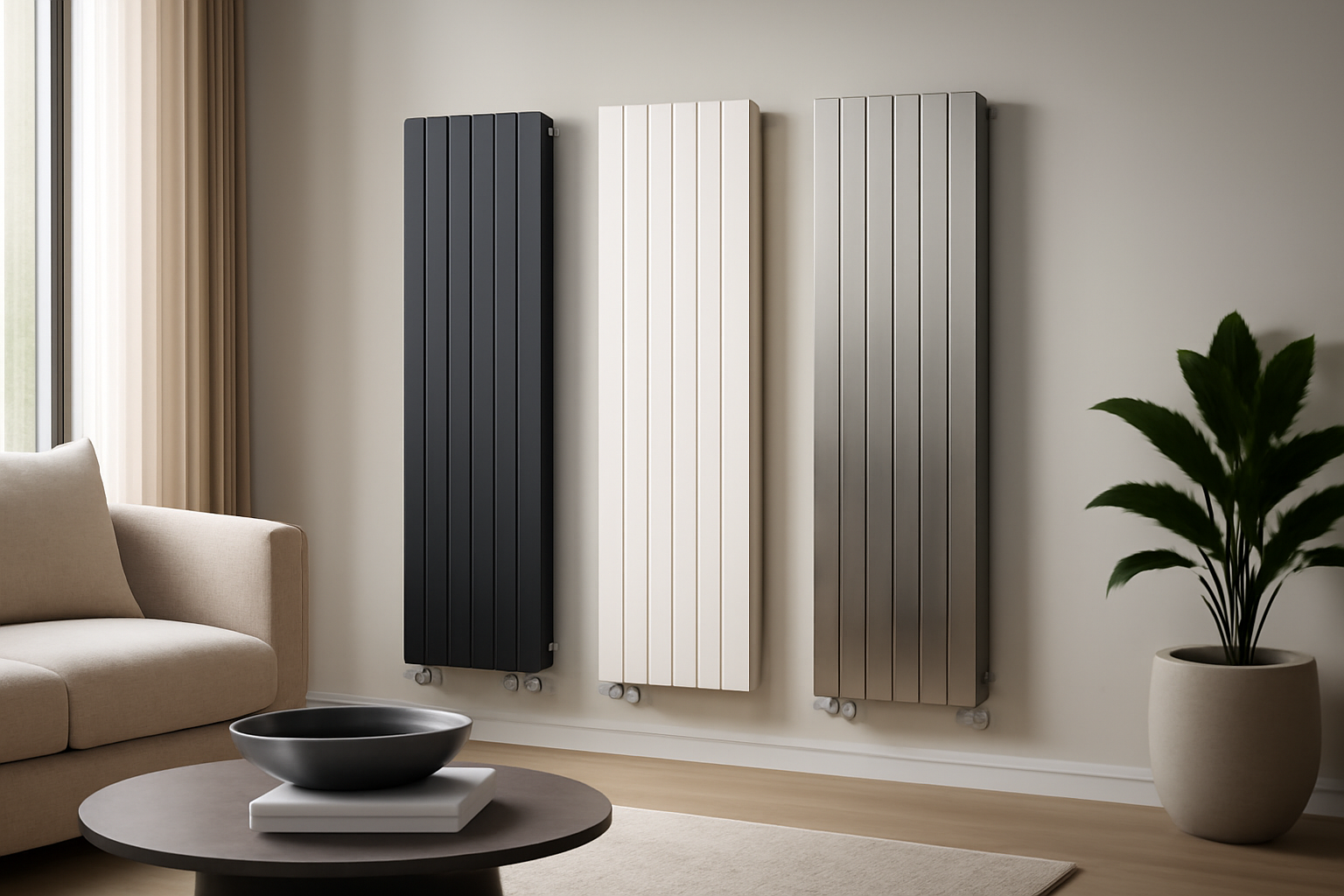
Does Radiator Colour Affect Heat Output? How Finish, Gloss and Coating Thickness Influence Decorative Radiator Performance
When choosing a decorative radiator, colour and finish are often just as important as size and shape. A radiator can become a visible part of an interior scheme, so homeowners naturally ask whether a black, white, metallic, glossy or matt surface will heat a room differently.
So, does radiator colour affect heat output? The short answer is yes, but usually not in the way people expect. The colour itself is rarely the main factor. Instead, performance is influenced by the radiator’s design, dimensions, material, water temperature, flow rate, surface area and test conditions. The finish can also have a measurable effect through surface emissivity, reflectivity and coating thickness, although these effects are generally smaller than the impact of radiator size and system temperature.
Understanding these details makes it easier to select a decorative radiator that looks right without compromising practical heating performance.
What Determines Radiator Heat Output?
Before comparing colours and finishes, it is important to understand what controls a radiator’s output. A radiator’s stated wattage or BTU rating is normally based on standard laboratory conditions. In real use, the actual output depends on several factors, including:
- Radiator dimensions: Larger radiators generally provide more surface area for transferring heat.
- Design and construction: Panel radiators, column radiators, tubular models and designer radiators distribute heat differently.
- Water temperature: Higher flow and mean water temperatures usually produce greater output.
- Flow rate: The radiator must receive sufficient hot water to perform correctly.
- Room conditions: Insulation, windows, ceiling height and heat loss affect the comfort achieved.
- Installation: Air trapped in the radiator, incorrect balancing or restricted valves can reduce performance.
- Test standards: Published outputs depend on the temperature difference and testing method used.
This means a dark decorative radiator is not automatically more powerful than a white one. A larger white radiator operating with suitable water flow may provide considerably more heat than a smaller black radiator with the same nominal design.
Does Radiator Colour Affect Heat Output?
Colour can influence radiant heat transfer because different colours and finishes absorb and emit thermal radiation differently. In everyday heating applications, however, the difference between common radiator colours is normally modest compared with the influence of size, construction and water temperature.
Radiators heat rooms in two main ways: through convection and radiation. Convection warms the air as it moves around the radiator. Radiation transfers heat directly from the warm surface to surrounding objects and people.
For convection, colour has very little practical importance. The air responds mainly to the radiator’s temperature, surface area and shape. A black radiator and a white radiator at the same surface temperature will create broadly similar air movement.
For radiant heat transfer, the surface finish matters more. A surface with high emissivity is generally better at emitting thermal radiation than a highly reflective, low-emissivity surface. This is why certain matt or textured coatings may perform slightly differently from polished metallic surfaces.
In practical terms, colour selection should be treated as a design decision first and a heat-output decision second. The difference between a standard painted white radiator and a carefully selected coloured finish is unlikely to transform the heating performance of a correctly sized radiator.
Radiator Surface Emissivity Explained
Radiator surface emissivity describes how effectively a surface emits infrared heat compared with an ideal blackbody. A high-emissivity surface releases radiant energy efficiently, while a low-emissivity surface reflects more thermal energy and emits less.
Matt, dark and lightly textured coatings often have higher emissivity than polished or mirror-like metallic surfaces. This can support more radiant heat transfer at the same surface temperature. However, the overall room-heating result depends on the balance between radiation and convection, as well as the radiator’s total surface area and temperature.
It is also important not to confuse visual darkness with thermal performance. A dark matt coating may have useful emissive properties, but that does not mean every black radiator will outperform every white radiator. The underlying radiator design and the quality of the finish remain essential.
Radiator Paint and Heat Output
The relationship between radiator paint and heat output depends on the type of coating, its thickness and the condition of the surface. Radiator finishes are normally selected to provide colour, durability, corrosion protection and a consistent appearance. A professionally applied coating should be designed to tolerate the radiator’s operating temperature without cracking, peeling or releasing unwanted odours.
Applying several thick layers of unsuitable household paint can create problems. Excessive paint may:
- Reduce the effective thermal transfer from the metal surface.
- Obscure fine details, grooves or convector fins.
- Produce an uneven appearance.
- Peel or discolour when exposed to repeated heating cycles.
- Make valves, brackets or moving components difficult to operate.
For this reason, repainting a radiator should be approached carefully. A compatible radiator coating applied in a controlled, even layer is preferable to repeated decorative paint applications. When buying a new radiator, a factory-applied or professionally specified finish is generally the most reliable option for appearance and long-term performance.
Radiator Coating Thickness: Why It Matters
Radiator coating thickness affects heat transfer mainly because the coating sits between the hot metal and the surrounding air. Metal conducts heat very efficiently, while paint and powder coatings conduct heat less efficiently. A thin, uniform coating usually has only a small effect, but a thick or uneven build-up can add unnecessary thermal resistance.
The most important point is consistency. A correctly applied coating should cover the radiator evenly without creating heavy deposits in corners, between tubes or across convector fins. These areas may be especially important because they contribute to the radiator’s effective surface area and air movement.
Modern powder coating and specialist wet-paint systems can provide a durable finish with controlled application. The coating is not intended to act as insulation; it is designed to protect the radiator while allowing heat to pass effectively through the surface.
Glossy vs Matt Radiator Finish
When comparing a glossy vs matt radiator finish, both appearance and thermal properties should be considered.
| Finish | Visual characteristics | Thermal considerations | Maintenance considerations |
|---|---|---|---|
| Matt | Soft, contemporary appearance with reduced reflections | Often provides strong emissive behaviour; practical difference depends on the coating system | Can disguise minor marks but may need careful cleaning |
| Satin | Balanced sheen between matt and gloss | Offers a versatile surface without the strong reflectivity of polished finishes | Usually easy to maintain and suitable for many interiors |
| Gloss | Bright, reflective and visually smooth | May reflect more radiant energy than a matt coating, although overall output is still design-dependent | Can show fingerprints, dust and surface imperfections more clearly |
| Metallic or polished | Distinctive reflective or industrial appearance | May have lower emissivity than a matt painted surface, particularly when highly polished | Requires suitable cleaning products to avoid scratches or dulling |
The table provides general guidance rather than a universal ranking. The exact coating chemistry, application method, substrate and radiator design all influence the final result.
Does a Black Radiator Give Off More Heat?
The idea that black radiators always give off more heat comes from the principle that dark, matt surfaces can emit thermal radiation effectively. There is some scientific basis behind the concept, but it is often overstated in home heating discussions.
A black radiator may have a slightly different radiant performance from a bright white or polished radiator when both operate at the same temperature. However, the colour does not increase the radiator’s water temperature, surface area or flow rate. It cannot compensate for an undersized radiator, poor system balancing or inadequate insulation.
Therefore, black can be a sensible choice where the finish suits the room, but it should not be selected solely on the assumption that it will deliver dramatically more heat.
Decorative Radiator Colour Selection: What Should You Prioritise?
Good decorative radiator colour selection combines heating requirements with interior design. Use the following priorities when choosing a finish:
1. Calculate the required output first
Estimate the room’s heat loss or obtain professional sizing advice before choosing a colour. Confirm the required output under the temperature conditions of your heating system. A heat pump, for example, may operate at lower water temperatures than a traditional boiler system, which can affect the radiator size required.
2. Choose the radiator format for the room
Consider whether a vertical radiator, horizontal radiator, towel radiator, column radiator or flat-panel design offers the best use of wall space. The format and dimensions usually have a far greater influence on output than colour.
3. Select a finish compatible with the room
Matt finishes suit minimalist and contemporary interiors, while gloss can create a brighter, more polished effect. Metallic finishes may work well in industrial or luxury schemes, but they should be selected with realistic expectations about their thermal characteristics and maintenance requirements.
4. Consider cleaning and daily use
High-gloss surfaces may highlight dust, fingerprints and scratches. Textured or matt finishes can be more forgiving, but they may require gentle cleaning to protect the coating. In kitchens, bathrooms and busy hallways, durability is especially important.
5. Avoid unnecessary repainting
If the radiator already has a suitable factory finish, repainting it may create more risk than benefit. A compatible custom finish specified before manufacture or applied by a qualified professional is generally preferable.
What About Stainless Steel 304 Radiators?
Stainless steel 304 is an austenitic stainless steel grade containing chromium and nickel. It is widely valued for its corrosion resistance, clean appearance and suitability for many interior and bathroom applications. It is not simply a decorative paint colour; the visible surface is the stainless steel itself, which may be brushed, polished or otherwise finished.
The thermal conductivity of stainless steel is lower than that of mild steel, but radiator performance cannot be judged from conductivity alone. Design, tube size, surface area, water temperature, flow and construction are all important. A well-designed stainless steel 304 radiator can provide effective heating while offering strong resistance to corrosion and a distinctive appearance.
Brushed stainless steel generally has a softer, less reflective appearance than mirror-polished stainless steel. The visual finish can influence emissivity and radiant behaviour, but it does not remove the need to select the correct radiator size and output for the room.
Practical Buying Checklist
- Check the radiator’s rated output and the test conditions behind it.
- Match the output to the room’s heat-loss requirement.
- Confirm whether the radiator suits your system’s flow and return temperatures.
- Compare dimensions, surface area and design—not colour alone.
- Ask how the coating is applied and whether it is suitable for radiator operating temperatures.
- Avoid thick, improvised paint layers that may cover fins or create uneven surfaces.
- Choose matt, satin, gloss or metallic finishes according to the room’s style and maintenance needs.
- For stainless steel 304, check the actual grade and surface finish rather than assuming all metallic radiators are the same.
Frequently Asked Questions
Does radiator colour significantly change heat output?
Usually, no. Colour and finish can influence radiant heat transfer, but radiator size, design, water temperature, flow and installation have a much greater effect on practical heat output.
Is a black radiator hotter than a white radiator?
Not necessarily. A black matt surface may emit radiant heat efficiently, but both radiators will still depend on their design, dimensions and operating temperature. A colour change does not automatically make a radiator more powerful.
Does radiator paint reduce heat output?
A thin, compatible coating normally has a limited effect. Thick, uneven or unsuitable layers may reduce heat transfer, obscure convector surfaces and create durability problems.
Is matt better than gloss for radiator performance?
Matt finishes often have favourable emissivity characteristics, while glossy or polished surfaces can be more reflective. The practical difference is usually modest, so choose a finish that also meets your appearance and maintenance requirements.
Can I paint my radiator any colour?
Many radiators can be professionally refinished, but the coating must be compatible with the radiator material and operating temperature. Avoid applying thick layers or covering vents, fins, threads and moving valve components.
Are stainless steel 304 radiators efficient?
They can be highly effective when correctly designed and sized. Stainless steel 304 offers corrosion resistance and a distinctive finish, but performance still depends on surface area, construction, water temperature, flow and test conditions.
Conclusion
A radiator’s finish matters, but it is only one part of the performance equation. Surface emissivity, gloss level and coating thickness can influence radiant heat transfer, while colour mainly affects appearance and has a relatively limited practical impact in most homes.
For the best result, choose the correct radiator size and design first, then select a durable decorative radiator finish that suits your interior. When output, installation and coating quality are properly matched, a decorative radiator can provide reliable warmth without compromising the style of the room.
Contact Us
For product information and help choosing the right solution, contact Isti Radiator.