


How to Compare Steel Radiator Quotes: A Buyer’s Checklist
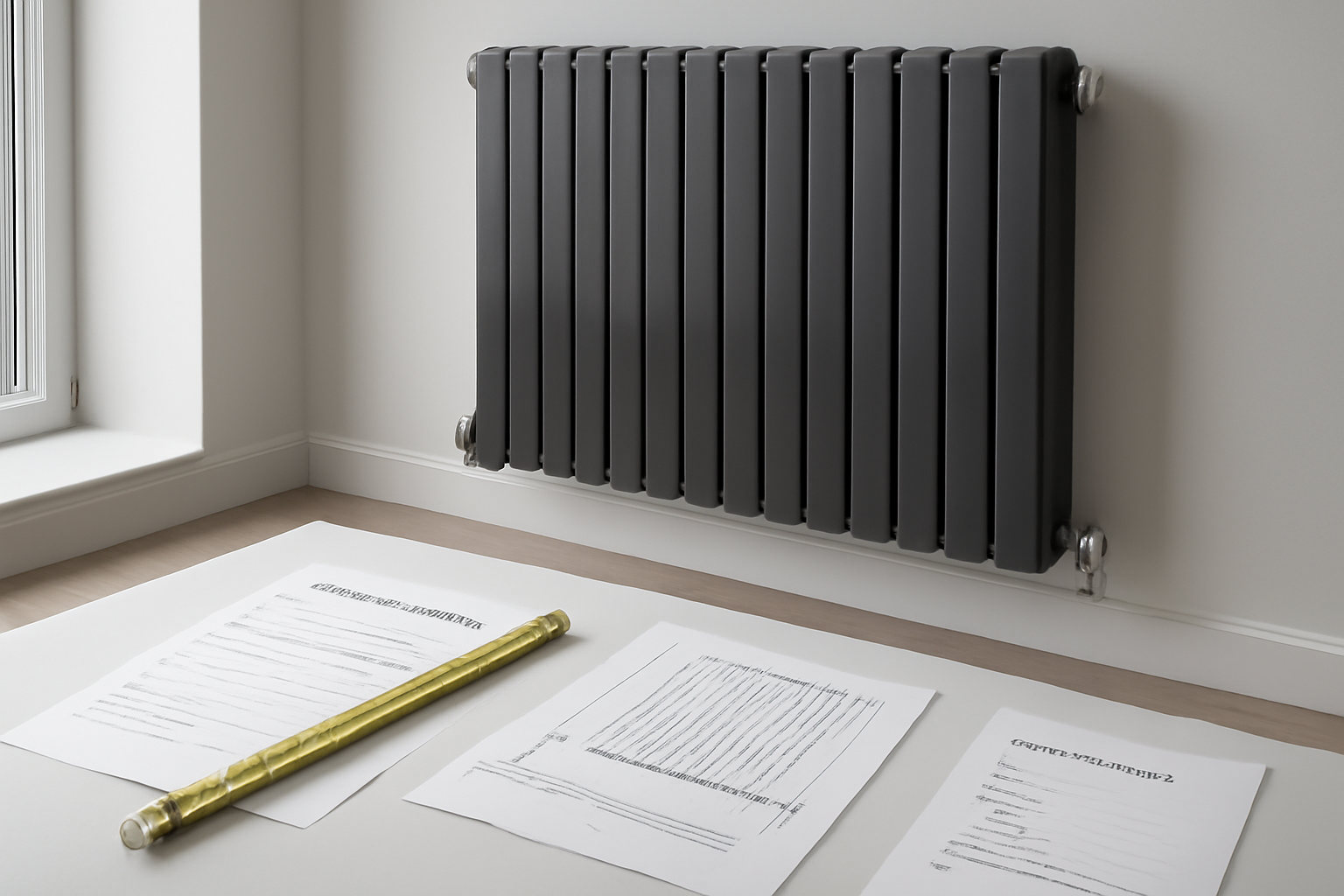
How to Compare Steel Radiator Quotes: A Buyer’s Checklist
Comparing steel radiator quotes is not simply a matter of choosing the lowest price. Two quotations can look similar while offering different heat outputs, dimensions, connection positions, finishes, accessories, delivery terms, and installation requirements.
A reliable comparison starts by making every quotation describe an equivalent product. This steel radiator buying guide explains what to check before you approve an order, how to compare steel radiator prices fairly, and how to estimate the real cost of getting each radiator installed and operating correctly.
Why the Lowest Steel Radiator Quote May Not Be the Best Value
A radiator quote may exclude important items such as valves, brackets, air vents, wall plugs, pipe alterations, delivery, lifting, removal of an existing radiator, or final system testing. A lower-priced radiator may also have a lower heat output, meaning you need a larger unit or additional heating capacity to achieve the same room temperature.
For that reason, the right question is not “Which radiator is cheapest?” It is “Which quotation provides the required performance and complete installation scope at the lowest dependable total cost?”
Step 1: Confirm the Required Heat Output
Heat output is the first point in any radiator specification comparison. Before comparing prices, determine the output required for the room, usually expressed in watts (W) or British Thermal Units per hour (BTU/h).
Radiator output depends on several variables:
- Radiator design, such as panel type, number of panels, fins, tubes, or sections
- Overall height, width, and depth
- Water flow temperature and return temperature
- Room size, insulation, windows, external walls, and ceiling height
- Flow rate and system performance
- The test standard and temperature conditions used for the published rating
Therefore, a heat output figure should never be compared without checking the test conditions behind it. A radiator rated at one water temperature may deliver a different real-world output in a lower-temperature heating system.
How to compare steel radiator heat output
When reviewing a steel radiator heat output comparison, record the following information for every quoted model:
- Nominal heat output in watts or BTU/h
- Output test condition or Delta T, if provided
- Radiator dimensions and depth
- Connection arrangement used to achieve the quoted output
- Whether the output is per radiator, per section, or per metre
Do not compare a radiator listed as “600 W per metre” with another listed as “1,200 W total” until the dimensions and test conditions are clear. Also, do not assume that a larger radiator always provides proportionally higher output. Internal construction, convector elements, surface area, and water circulation all influence performance.
Step 2: Compare Equivalent Radiator Specifications
A proper radiator specification comparison should place equivalent details side by side. Use the same format for every supplier so that differences are visible rather than hidden in product descriptions.
| Specification | What to check | Why it matters |
|---|---|---|
| Material | Steel grade or construction description | Influences strength, corrosion resistance, weight, and manufacturing quality |
| Dimensions | Height, width, depth, and projection from the wall | Confirms fit and helps compare surface area and output |
| Heat output | Watts or BTU/h and test condition | Shows whether the radiator can meet the room’s heating demand |
| Connections | Thread size, position, centre distance, and connection type | Determines compatibility with pipework and valves |
| Working pressure | Maximum operating pressure stated by the manufacturer | Helps confirm suitability for the heating system |
| Finish | Coating or paint system and available colour | Affects appearance, durability, and maintenance expectations |
| Accessories | Brackets, plugs, vents, valves, and fixing hardware | Prevents unexpected additional purchases |
| Warranty | Warranty period and applicable conditions | Clarifies after-sales protection and exclusions |
Understanding stainless steel 304
If a quotation specifies stainless steel 304, it refers to an austenitic stainless steel grade containing chromium and nickel. Its chromium content supports the formation of a passive oxide layer that helps protect the surface from corrosion, while nickel contributes to its corrosion resistance and formability.
Stainless steel 304 is widely used where a clean appearance, durability, and good resistance to ordinary atmospheric and indoor corrosion are required. However, the material grade alone does not determine radiator heat output. Output still depends on the radiator’s design, dimensions, water temperature, flow, and test conditions. It is also important to distinguish 304 from other stainless grades and to confirm whether the quotation refers to the complete radiator or only selected components.
For demanding environments with significant exposure to chlorides or aggressive contaminants, the suitability of 304 should be assessed against the actual installation conditions. A higher material cost is justified when it provides a clear performance or durability benefit for the application, not merely because the grade name sounds more premium.
Step 3: Check Radiator Connection Compatibility
Radiator connection compatibility is one of the most common causes of unexpected installation work. A radiator can have the correct heat output and still be unsuitable for a direct replacement if its inlet and outlet positions do not match the existing pipework.
Ask each supplier to confirm:
- Connection thread size and standard
- Connection position, such as bottom, side, centre, or diagonal
- Distance between connection centres
- Whether connections are reversible or fixed
- Number and location of air vents and drain points
- Valve type required, including manual, thermostatic, straight, or angled valves
- Whether adapters or extension pieces are included
Take accurate measurements before requesting final quotations. Measure the existing radiator, the wall-to-pipe distance, pipe centres, and available clearance around windows, furniture, skirting boards, and doors. A connection diagram or technical drawing is preferable to a verbal description.
Replacement versus new installation
A replacement radiator may require only minor reconnection if the new unit matches the existing pipe centres. A new installation can involve pipe routing, wall preparation, bracket installation, drilling, floor access, and system balancing. These two projects should not be compared using the same labour allowance.
Step 4: Separate Product Price from Total Installation Cost
A useful radiator installation cost checklist divides the project into product, accessories, labour, and possible extras. Request an itemised quotation rather than a single total whenever possible.
Product and accessory costs
- Radiator body
- Mounting brackets or feet
- Air vent and blanking plug
- Radiator valves and lockshield valves
- Pipe tails, adapters, extensions, or reducers
- Decorative covers or connection accessories
- Special finish or colour surcharge
Installation labour
- Removal and disposal of the old radiator
- Draining or isolating the heating circuit
- Wall marking, drilling, and bracket fixing
- Pipe cutting, rerouting, or extension
- Valve installation and connection
- Refilling, bleeding, leak testing, and pressure checks
- System balancing and commissioning
Potential additional costs
- Repair of damaged walls, tiles, flooring, or pipework
- Replacement of corroded valves or seized fittings
- Access equipment or lifting for large radiators
- Delivery to upper floors or restricted-access locations
- Out-of-hours installation or difficult site conditions
- Disposal fees and packaging removal
The best quote should clearly identify what is included, what is excluded, and which costs may change after a site inspection.
Step 5: Learn How to Compare Steel Radiator Prices
When considering how to compare steel radiator prices, normalise the quotations before making a decision. Create a comparison sheet with one row for each supplier and one column for each important cost or specification.
For each quote, record:
- Radiator model or reference
- Material and finish
- Dimensions and weight
- Heat output and test condition
- Connection details
- Included accessories
- Product price and taxes
- Delivery and lead time
- Installation labour
- Possible additional work
- Warranty terms
- Final installed price
Then remove or add items until each quote represents the same scope. For example, if one supplier includes valves and brackets while another quotes the radiator body only, add equivalent accessories to the second quote before comparing totals.
Step 6: Review Quality, Finish, and Documentation
Price comparisons should include practical quality indicators. Ask whether the supplier can provide a technical datasheet, dimensional drawing, heat output information, installation instructions, and warranty conditions.
Inspect the stated finish requirements, especially for bathrooms, kitchens, commercial areas, and other locations where humidity or cleaning chemicals may affect long-term appearance. The coating should be appropriate for the intended environment and applied consistently across visible surfaces.
Documentation also protects you from ordering the wrong product. A quotation that includes exact dimensions, connection positions, output conditions, and accessories is more reliable than one based only on a product name and a price.
Steel Radiator Procurement Checklist
Use this checklist before approving a purchase:
- Room heat requirement has been calculated or confirmed.
- Heat output figures use comparable test conditions.
- Radiator dimensions fit the available wall and floor space.
- Connection centres and thread sizes match the installation.
- Required valves and accessories are included or priced separately.
- Material grade and finish are clearly stated.
- Working pressure and system suitability have been checked.
- Delivery time and delivery charges are confirmed.
- Installation scope includes testing and commissioning.
- Potential additional labour is explained.
- Warranty terms and exclusions are available in writing.
- Final installed cost is compared, not only the radiator price.
Common Mistakes When Comparing Radiator Quotes
Comparing dimensions instead of output
Two radiators with similar dimensions may have different outputs because of their internal design and test conditions. Always compare verified output, not size alone.
Ignoring connection positions
A low-cost radiator that requires extensive pipe alterations may become more expensive than a slightly higher-priced unit designed for a direct replacement.
Assuming accessories are included
Valves, brackets, vents, and fittings may be excluded unless the quotation lists them. Confirm every item required for a complete installation.
Using one output figure for every heating system
Published output is based on specific conditions. If the heating system operates at lower temperatures, the radiator may deliver less heat than the headline rating suggests.
Accepting an unclear quotation
Ambiguous descriptions create disputes and delays. Ask for a revised quote with model details, dimensions, connections, output, inclusions, exclusions, delivery, and installation scope.
Frequently Asked Questions
Should I choose the radiator with the highest heat output?
Not automatically. The radiator should provide the output required for the room under the actual system conditions. Excess capacity may increase cost, size, and control requirements, while insufficient capacity can leave the room cold.
Is stainless steel 304 always better than standard steel?
Stainless steel 304 offers strong resistance to ordinary indoor corrosion and a durable, clean appearance. Whether it is the best choice depends on the installation environment, design, budget, and required service life. It does not automatically provide higher heat output.
Can I compare radiator prices without comparing installation?
You can compare product prices separately, but you should not use them to choose the best project value. Installation, valves, pipe modifications, delivery, and commissioning can significantly affect the final cost.
What connection information should I send to a supplier?
Provide radiator height and width, pipe centre measurements, wall-to-pipe distance, connection positions, pipe diameter, valve type, and clear photographs or a sketch where possible.
Why do two suppliers quote different heat outputs for similar radiators?
The difference may result from radiator construction, dimensions, convector design, water temperature, flow, Delta T, test standards, or whether the figure is calculated per section, per metre, or for the complete radiator.
What makes a steel radiator quote complete?
A complete quote identifies the product, material, dimensions, heat output, test condition, connections, finish, accessories, delivery, warranty, installation scope, exclusions, and final applicable taxes or charges.
Conclusion
The most dependable steel radiator buying guide is based on equivalent performance and complete project cost. Compare heat output under matching conditions, confirm connection compatibility, review material and finish, and ask for every accessory and installation task to be listed. When each quotation is measured against the same technical and commercial requirements, the best choice becomes clearer—and the risk of costly surprises is much lower.
Contact Us
For product information and help choosing the right solution, contact Isti Radiator.