


Decorative Radiator Placement: Curtains, Furniture, and Wall Shelves
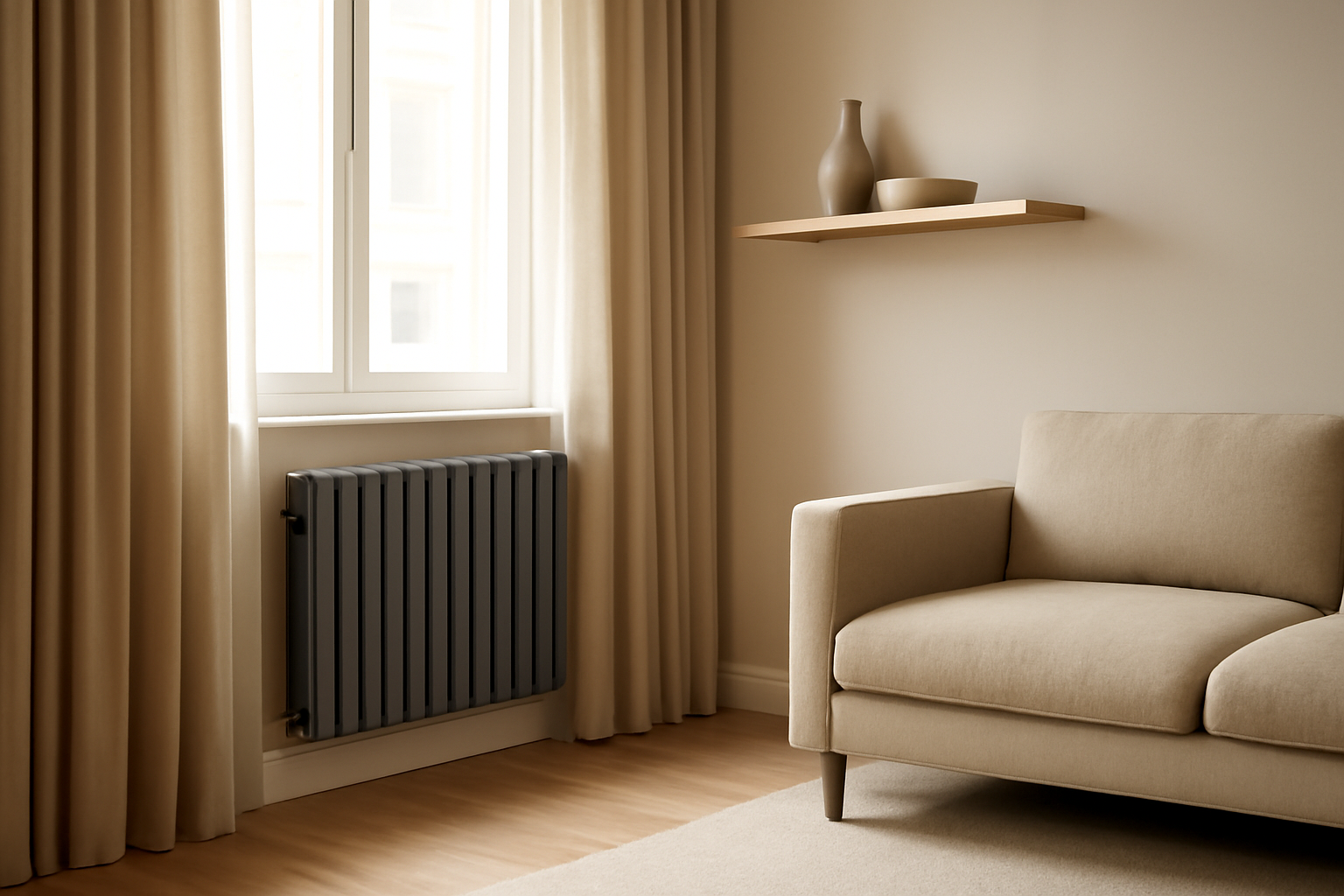
Decorative Radiator Placement: How Curtains, Furniture, and Wall Shelves Affect Heat Distribution
A decorative radiator can become an important architectural feature, not just a heating appliance. Its shape, finish, and position can complement a room’s style, but attractive design should always work together with effective heat distribution. The wrong location may trap warm air, create cold zones, reduce comfort, or make maintenance more difficult.
Good decorative radiator placement considers the radiator’s heat output, the size of the room, nearby windows and doors, furniture layout, curtain length, and the clearance around shelves and other wall-mounted objects. With the right planning, a decorative radiator can provide reliable warmth while remaining visually balanced.
Why Decorative Radiator Placement Matters
Radiators heat a room through a combination of convection and radiation. Warm air rises from the radiator, moves through the room, cools, and then circulates back toward the heat source. If this movement is blocked, heat may collect behind curtains, inside furniture, or beneath a shelf instead of spreading evenly.
Placement also affects practical issues such as cleaning, air quality, surface protection, and long-term performance. A radiator installed too close to furniture can leave the front of the room comfortable while the rest remains cool. A radiator hidden behind heavy curtains may heat the window area rather than the living space. A shelf installed too close above the unit can interrupt the upward movement of warm air.
Before choosing a final position, remember that heat output depends on the radiator’s design, dimensions, water temperature, flow rate, connection method, and the test conditions used to measure performance. Two radiators with similar dimensions may not deliver identical results, so placement should be planned alongside the manufacturer’s technical specifications.
Where to Place a Decorative Radiator
The most common and often effective location is on an external wall, particularly beneath or near a window. Windows can create cooler areas because of glass surfaces and air movement. Positioning a radiator nearby can help offset this cooling effect and reduce noticeable temperature differences across the room.
However, the window position is not an automatic rule. A large decorative radiator may work better on an adjacent wall if the window is very low, the curtains are full-length, or the available wall space is limited. The best location is the one that combines suitable heat circulation with practical clearances and a sensible furniture arrangement.
Key placement questions
- Can warm air rise freely from the radiator?
- Will curtains, sofas, cabinets, or beds cover the front surface?
- Is there enough space to clean behind and around the radiator?
- Will the position interfere with doors, drawers, walkways, or electrical fittings?
- Can pipework and valves be installed without awkward bends or restricted access?
- Does the radiator have sufficient output for the room’s heat-loss requirements?
Radiator and Curtain Placement
Curtains are among the most common causes of restricted radiator performance. When a curtain falls directly over the radiator, warm air can become trapped between the fabric and the wall or window. This may make the thermostat respond to a warmer pocket of air while the main room remains cooler.
For the best radiator and curtain placement, aim for curtains that finish above the radiator or sit in front of it only when the heating is not operating. If full-length curtains are essential for the room’s design, use a curtain track or pole that allows the fabric to move clear of the radiator, or select a radiator position beside the window rather than directly beneath it.
Practical curtain guidelines
- Keep heavy fabric from resting against the radiator surface.
- Allow warm air to rise into the room rather than behind the curtain.
- Use tiebacks or side returns when curtains must extend to the floor.
- Check that blinds, curtain linings, and decorative valances do not cover the radiator top.
- Clean curtains regularly because dust can circulate when the radiator is operating.
In compact rooms, a short curtain positioned just above the radiator can be more efficient than a floor-length design. In bedrooms and living rooms, the visual effect should be considered too: leaving the radiator partly visible may improve both air circulation and the balance of the wall.
Radiator Clearance from Furniture
Furniture can restrict heat circulation in several ways. A sofa placed directly in front of a radiator absorbs and blocks rising warm air. A deep cabinet can create a heat pocket behind it, while a bed or desk may prevent air from moving into the centre of the room.
The correct radiator clearance from furniture depends on the radiator design, its depth, and the manufacturer’s installation guidance. As a practical planning principle, leave enough space in front of the radiator for warm air to rise and move outward. Also avoid placing furniture so close that it touches the radiator, valves, or pipe connections.
Avoid using the radiator as a drying rack or placing cushions, blankets, baskets, or storage boxes over it. These objects can reduce heat transfer, collect dust, and in some cases create a safety concern. They may also mark or damage decorative finishes over time.
Furniture placement by room
| Room | Common obstruction | Better approach |
|---|---|---|
| Living room | Sofa placed directly in front of the radiator | Position seating beside the radiator or leave an open air path in front |
| Bedroom | Bed, headboard, or storage bench blocking the unit | Use a clear wall section and keep bedding away from the radiator |
| Hallway | Coat rack or shoe cabinet covering the radiator | Choose a slim unit and keep circulation areas unobstructed |
| Home office | Desk positioned over or tightly against the radiator | Allow warm air to rise behind or beside the desk without trapping it |
Radiator Wall Shelf Clearance
A wall shelf above a decorative radiator can create an attractive display area, but it must not prevent warm air from rising. A shelf installed too close to the top of the radiator may act like a lid, pushing heat toward the wall or into the objects placed on the shelf.
Radiator wall shelf clearance should be determined using the radiator manufacturer’s instructions, because different designs release heat in different ways. As a general design principle, leave a generous open gap above the radiator and avoid deep shelves that project far beyond the radiator’s front plane.
Be particularly careful with wooden shelves, painted finishes, framed artwork, candles, electronics, and heat-sensitive decorative objects. Even when the radiator operates at a normal temperature, continuous exposure to rising warm air may affect some materials or cause dust to accumulate more quickly.
How to use shelves safely and effectively
- Keep the shelf shallow enough to preserve upward airflow.
- Follow the required top clearance in the installation instructions.
- Do not place flammable, heat-sensitive, or unstable objects above the radiator.
- Use secure wall fixings suitable for the shelf weight and wall type.
- Leave access to air vents, bleed points, valves, and connection points.
How to Improve Radiator Heat Circulation
If a room feels unevenly heated, improving circulation may be more effective than immediately increasing the thermostat. Start by checking whether curtains, furniture, shelves, or decorative items are blocking the radiator. Remove obstructions and allow the heated air to move into the room.
Useful circulation improvements
- Clear the radiator front: Keep sofas, cabinets, boxes, and textiles away from the main airflow path.
- Check the top of the radiator: Make sure shelves, ledges, and curtains do not trap rising air.
- Keep the radiator clean: Dust between panels and along the top can reduce effective heat transfer.
- Balance the heating system: If some rooms heat faster than others, the system may require balancing by a qualified professional.
- Inspect valves and connections: A faulty valve or trapped air can affect performance.
- Review room layout: Rearrange furniture so heat can move toward the centre of the room.
Reflective panels may be useful on some external walls, especially where heat could otherwise be absorbed by a poorly insulated wall. Their suitability depends on the wall construction and radiator design. They should not be used as a substitute for correct installation, adequate insulation, or sufficient radiator output.
Decorative Radiator Installation Tips
Good installation begins before the radiator is mounted. Measure the available wall carefully, including skirting boards, window trims, sockets, switches, curtain tracks, and furniture. Confirm the pipe centres and connection positions so the final installation does not require excessive pipework or compromise the room’s appearance.
The wall must be strong enough for the radiator and its brackets. Heavier steel or multi-panel designs may require appropriate fixings, particularly on hollow walls or partition systems. The radiator should be installed level, securely supported, and positioned according to the manufacturer’s clearances.
Choose valves that suit both the heating system and the radiator’s visual style. Thermostatic radiator valves should remain accessible and should not be enclosed behind curtains or furniture, because restricted airflow around the valve can affect temperature sensing.
Buying Guidance: Choosing a Decorative Radiator for the Space
When comparing decorative radiators, begin with the room’s required heat output rather than appearance alone. A slim vertical radiator may save wall space, while a wider horizontal model may distribute heat differently across the room. Check the stated output under the relevant test conditions and compare it with the room’s heat-loss requirement.
Material and finish also matter. Stainless steel can provide a clean, contemporary appearance and strong resistance to corrosion when correctly specified and maintained. If a product is described as stainless steel 304, this refers to an austenitic stainless-steel grade commonly containing chromium and nickel, with good general corrosion resistance. It is not completely corrosion-proof in every environment, and performance still depends on water quality, installation conditions, cleaning products, and exposure to chlorides or aggressive chemicals.
Before buying, consider:
- Required heat output for the room
- Radiator dimensions and projection from the wall
- Available clearance from curtains, furniture, and shelves
- Connection type and pipe positions
- Valve compatibility and accessibility
- Wall strength and bracket requirements
- Finish durability and cleaning needs
- Whether the style works with future furniture changes
Decorative Radiator Maintenance
Regular decorative radiator maintenance helps preserve appearance and performance. Dust the surface and clean between sections using a soft brush or suitable vacuum attachment. Use a mild, non-abrasive cleaner recommended for the finish, and dry the radiator afterward.
Do not use harsh chemicals, abrasive pads, or rough tools that may scratch painted or polished surfaces. Periodically inspect brackets, valves, joints, and visible pipework for movement, corrosion, or signs of leakage. If the radiator contains trapped air, bleeding may be required, but follow the heating system’s instructions and check the system pressure afterward where applicable.
Keep the area around the radiator clear throughout the year. Furniture often moves after installation, and a previously open radiator can become blocked during room rearrangement.
Frequently Asked Questions
Can I place a sofa in front of a decorative radiator?
It is better to avoid placing a sofa directly in front of the radiator. If there is no alternative, leave as much open space as possible and ensure the sofa does not touch the radiator or block the valves. A side position usually provides better heat circulation.
Should curtains go behind or in front of a radiator?
Neither arrangement is ideal when the curtain fully traps the radiator. The preferred solution is to keep the curtain clear of the radiator, use a shorter curtain, or position the radiator beside the window. Heavy fabric should not rest against the heated surface.
How much space should be above a radiator shelf?
The required space depends on the radiator design and installation instructions. Leave a clear opening above the radiator large enough for warm air to rise freely, and avoid deep shelves that project over the unit.
Does placing a radiator under a window always improve heating?
Not always. It can help offset cool air near a window, but the final decision should also consider curtains, window height, radiator output, furniture, and available wall space.
Can a decorative radiator be installed behind furniture?
A radiator should not be concealed behind a cabinet, bed, sofa, or other large item. Restricted airflow reduces heat distribution and makes cleaning, valve access, and maintenance more difficult.
Conclusion
Effective decorative radiator placement is a balance between interior design and heat engineering. Keep curtains clear, provide sensible furniture clearance, leave sufficient space below shelves, and choose a radiator with output suited to the room. With careful planning and regular maintenance, a decorative radiator can remain a strong visual feature while delivering comfortable, even warmth.
Contact Us
For product information and help choosing the right solution, contact Isti Radiator.